Why Kids Resist Brushing and How Stories Change Behavior
Kids resist brushing because it feels controlling, unfamiliar, and emotionally disconnected. Stories change behavior by giving children purpose, identity, and emotional safety, turning brushing into something they choose rather than resist.
Why Do Kids Resist Brushing Their Teeth
Children rarely resist brushing because they do not understand instructions. They resist because brushing often feels like something being done to them rather than something they are part of.
Common reasons include:
- lack of control over their body
- sensory discomfort from taste or texture
- pressure during transitions like bedtime
- emotional overload from the day
- routines that feel rushed or tense
When brushing feels like a demand, resistance is a natural response.
Why Explaining Cavities and Bacteria Usually Fails
Adults often explain brushing using logic. Children experience the world through emotion and imagination first.
Concepts like germs, cavities, and long term health are abstract. What children actually feel is urgency, tone, and expectation.
Without emotional grounding, information alone creates friction instead of cooperation.
The Emotional Layer Behind Daily Brushing Struggles
Brushing usually happens during emotionally sensitive moments.
These include:
- end of the day fatigue
- separation from play
- bedtime transitions
- moments where independence matters most
The behavior is not the problem. The emotional context surrounding it is.
How Stories Transform Brushing Without Force
Stories work because they change the meaning of the action.
Instead of brushing being something a child must do, it becomes something they participate in.
Stories provide:
- a role to step into
- a reason that makes sense emotionally
- a sense of choice
- a feeling of contribution
This removes pressure and replaces it with purpose.
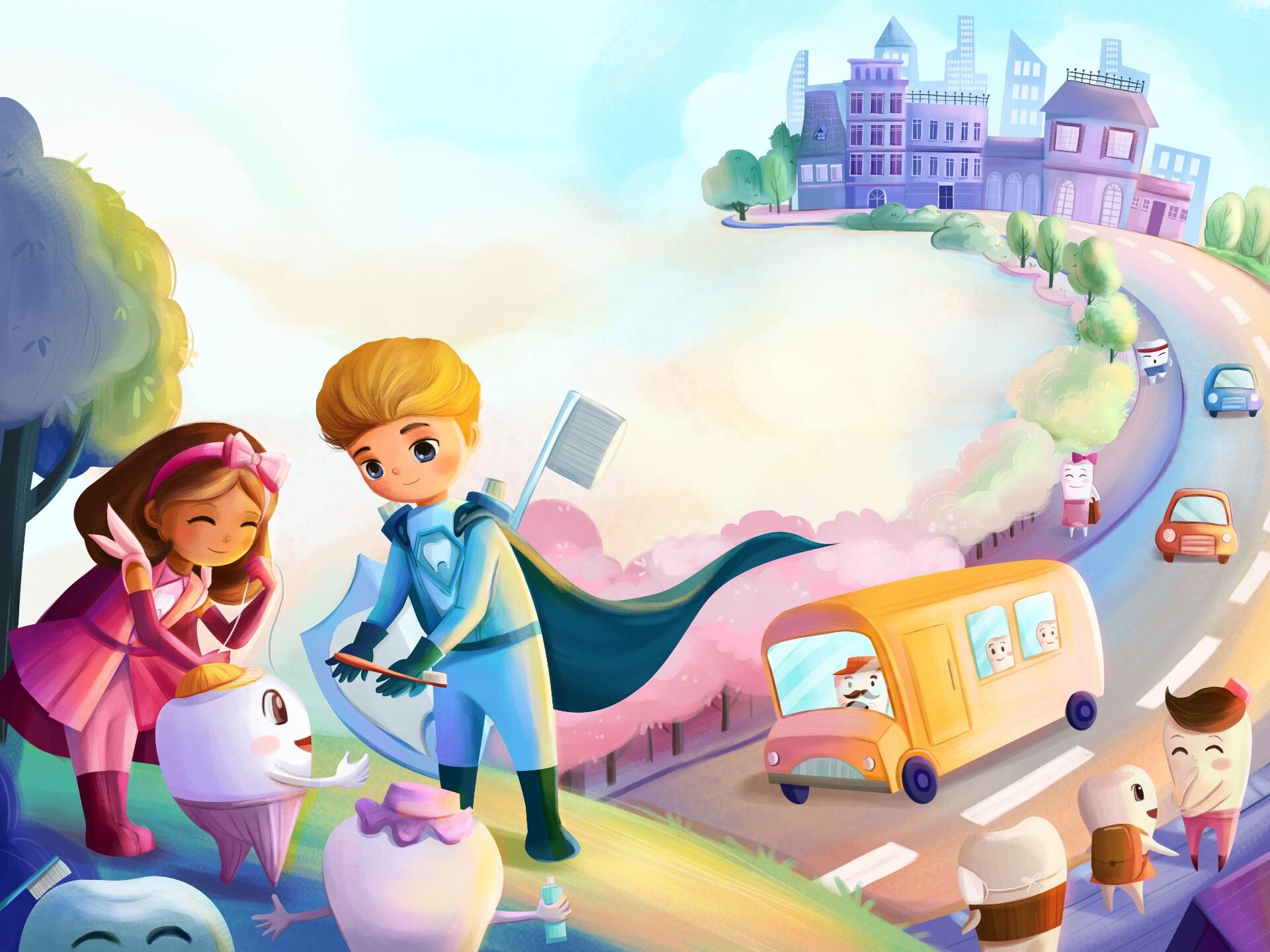
How Super Toothbrush and Flossy Gal Change the Experience
In Tooth Town, brushing is not about rules. It is about protection, teamwork, and care.
Super Toothbrush and Flossy Gal are not authority figures. They are guides.
The Sugar Bugs represent the challenges children already feel but cannot name. The Tooth Town citizens represent the parts of themselves children want to protect.
When a child brushes, they are not obeying. They are helping.
That shift changes everything.
Why Narrative Works Better Than Instruction
Instruction focuses on compliance. Stories focus on identity.
When children hear stories, they ask themselves who they are in that story.
A child who sees themselves as someone who helps Tooth Town begins to act from that identity.
Behavior follows identity, not commands.
How Stories Reduce Power Struggles at Home
Power struggles arise when control becomes the focus.
Stories remove control from the equation entirely.
Instead of saying, "It is time to brush your teeth."
The experience becomes, "It is time for Super Toothbrush and Flossy Gal to defeat the Sugar Bugs."
This reframing removes resistance without negotiation or force.
Why Fun Is Not a Distraction but a Regulation Tool
Fun signals safety to the nervous system.
When children feel safe:
- cooperation increases
- learning sticks
- habits form faster
- stress responses soften
Stories create engagement while preserving structure.
What Parents Notice When Stories Are Used
Parents often notice:
- calmer brushing routines
- fewer arguments
- children initiating brushing on their own
- smoother bedtime transitions
- greater confidence during dental visits
The routine becomes relational instead of reactive.
Why This Builds Long Term Habits
Habits formed through pressure tend to disappear. Habits formed through meaning tend to stay.
When brushing is connected to story and identity, it becomes part of daily life rather than a rule enforced by adults.
The Takeaway for Parents
Children resist brushing when it feels disconnected from them. Stories reconnect brushing to emotion, imagination, and purpose.
When brushing becomes part of a story, it stops being a battle and becomes something children choose.